
Dear friends,
People always ask me why I'm so fascinated by Asia. Why do I travel here so much? Well, why do I study its philosophies, why do I feel there's something profoundly different about this part of the world that resonates with me in a way that the West, my own home, often cannot.
The answer isn't just in the beautiful temples, the delicious food, or the breathtaking landscapes. It's in something much deeper: a completely different way of understanding who we are as human beings.
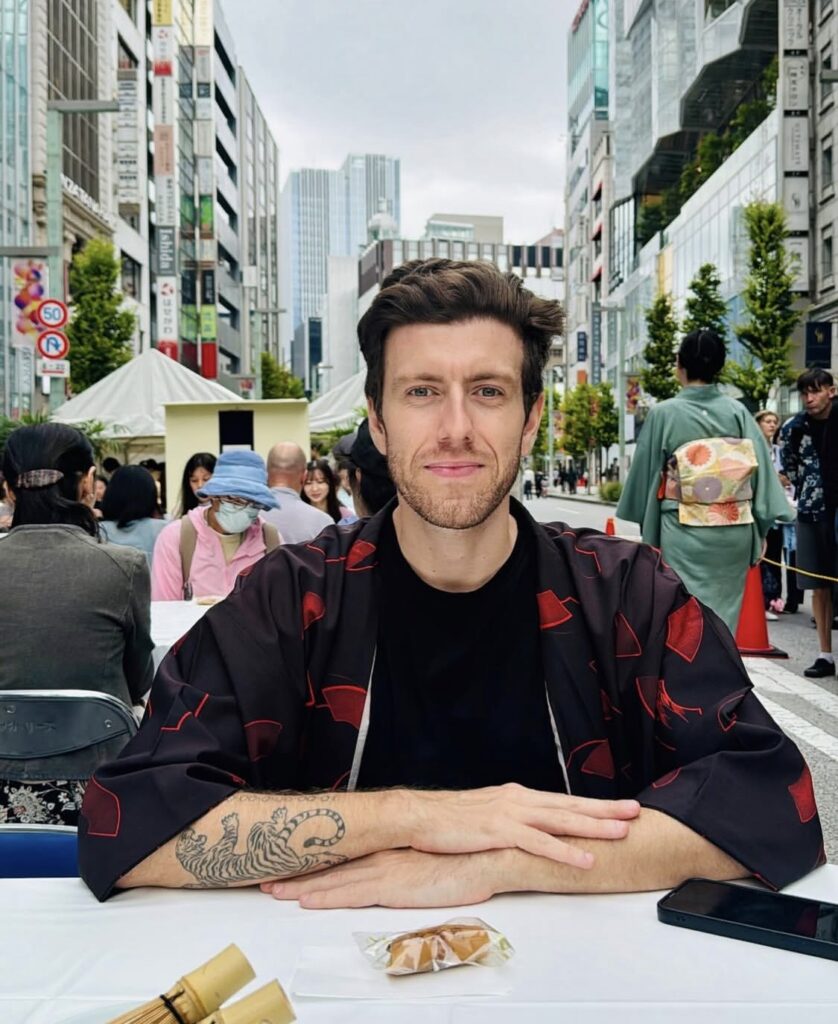
The story you're about to read is fictional—I created it to illustrate a real philosophical confrontation that has unfolded over centuries. But the tension it describes is absolutely true and continues to shape our lives today, even if we don't realize it. I hope you enjoy the read 🙂
Kyoto, Autumn 1650
The Zen monk Takuan Soho was watching the maple leaves fall in the temple garden when he received an unusual visit from a Portuguese Jesuit, Father Miguel Rodrigues. The priest brought with him a newly translated manuscript: "Discourse on Method" by René Descartes.
"Master Takuan," said the priest respectfully, "this French philosopher has written something that revolutionizes European thought: Cogito, ergo sum – I think, therefore I am."
The old monk leafed through the translated pages, his eyes scanning those foreign ideas. He remained silent for a long time.
Finally, he asked for paper and brush.
The first letter
"To the esteemed Mr. Descartes, through the hands of Father Rodrigues,
I received with interest your proposition that thought proves existence. But I ask you: who is this 'I' that thinks? The moment you say 'I think,' you have already created a separation between the thinker and the world.
Here in the East, we teach that the dewdrop does not exist separate from the ocean. Your philosophy concerns me, for if each man becomes the center of his own reality, what happens to the fabric that binds us? The son will forget the father, the ruler will forget the people, each one imprisoned in his own thinking mind.
A man alone is not human – he is merely a ghost contemplating himself.
With respect and concern, Takuan Soho" Takuan Soho”
Paris, spring 1651
Descartes, already weakened by the illness that would soon take him, received the letter through Jesuit channels. Intrigued, he replied.
The response
"Esteemed Master Takuan,
Your letter reached me like a koan – a puzzle that challenges my method. But I must clarify: when I say 'I think, therefore I am,' I seek only a solid foundation for knowledge, not the destruction of society.
The 'I' that thinks is the point of certainty from which we can build everything else – including ethics and social obligations.
Respectfully, René Descartes" René Descartes”
The last letter
Takuan never received this response.
Years later, Takuan’s disciple, Bankei Yotaku, found his master’s original letter and decided to complete the correspondence. He wrote to Europe, addressing Descartes’ successors:
"Masters of the West,
My teacher, who has already departed, feared that your ideas would create a world of mirrors – each person seeing only their own thinking reflection, unable to truly see the other.
Three hundred years in the future, there will come those who witness whether his concern was founded. They will observe whether your 'I think' created enlightened individuals or solitary egos.
The question remains: can an isolated thought know love? Can a separated mind comprehend compassion? Can the 'I' alone build a village?
We in the East say: 'I exist because we exist.'
May your descendants choose wisely.
Bankei Yotaku, 1693"
Epilogue
This imaginary correspondence never happened exactly this way, but the philosophical tension was real. While the West built the Enlightenment upon the rational individual, the East maintained traditions where identity was inseparable from society.
Centuries later, sociologists would confirm Takuan's concern: societies shaped by Cartesian individualism would face epidemics of loneliness, social fragmentation, and the eternal question – "who am I?" – without ever realizing that the answer had always been: "you are who you are to others."
So, what did you think?
Before anyone asks "which side is right?", let me be direct: that's not the question.
Tibetan monks have a teaching that has always impacted me: to compare is to suffer.When you put two things side by side to judge which is superior, you've already missed the point. This isn't about East versus West, about who has the "better" philosophy.
The Buddha himself taught that attachment to views and opinions is one of the main sources of human suffering. When we cling to the idea that "our way is the right way," we create division where there could be learning.
Think about yin-yang it's not a battle between light and darkness. It's a dance between them. Shadow isn't the enemy of light; it exists because of the light. One defines the other. Silence only has meaning because sound exists. Rest is only sweet and wonderful because we know fatigue.
Similarly, perhaps Western individualism and Eastern collectivism aren't warring opposites, but two halves of a greater truth about what it means to be human. We need the "I" AND the "we." Autonomy AND connection. The mind that thinks alone AND the heart that beats with others.
Some thoughts I had while writing this:
1. Identity doesn't exist in a vacuum
Even Descartes, when he said "I think, therefore I am," was writing for other people, in a language he learned from others, using concepts inherited from centuries of philosophers. Even the most solitary thinker is immersed in relationships.
2. Total freedom can be a prison
The modern West has given us unprecedented freedom to "be whoever we want." But have you noticed how paralyzing this can be? So many choices, so much pressure to "find yourself." Sometimes, having a clear role in the community (as in the traditional East) brings more peace than infinite possibilities.
3. Collectivism also has shadows
Before we romanticize the East too much: Asian social pressure can be crushing. Suicide over academic failure in Japan. Children who live entire lives to satisfy their parents. Individuals who suffocate their truths to maintain group harmony. Forced connection is as unhealthy as chosen isolation.
4. Perhaps synthesis is the way
What if we could take the best of both worlds? The individual consciousness of the West + the relational wisdom of the East? Being able to think critically AND belong deeply? It's not choosing one or the other – it's integrating both.
5. Your culture programs you without you realizing it
If you were born in the West and are reading this, your first reaction to problems is probably: "What do I think about this? What do I want to do?" A traditional Asian would first ask: "What does my family expect? How does this affect others?" Neither question is wrong... but realizing that other questions exist is already revolutionary.
So what's the point of this whole story?
I'm not saying you need to move to Asia or become a Buddhist. I'm saying there's an entire world of wisdom that our Western culture simply doesn't teach us. And knowing this other way of thinking doesn't make us less Western—it makes us more complete. Get it, traveler?!
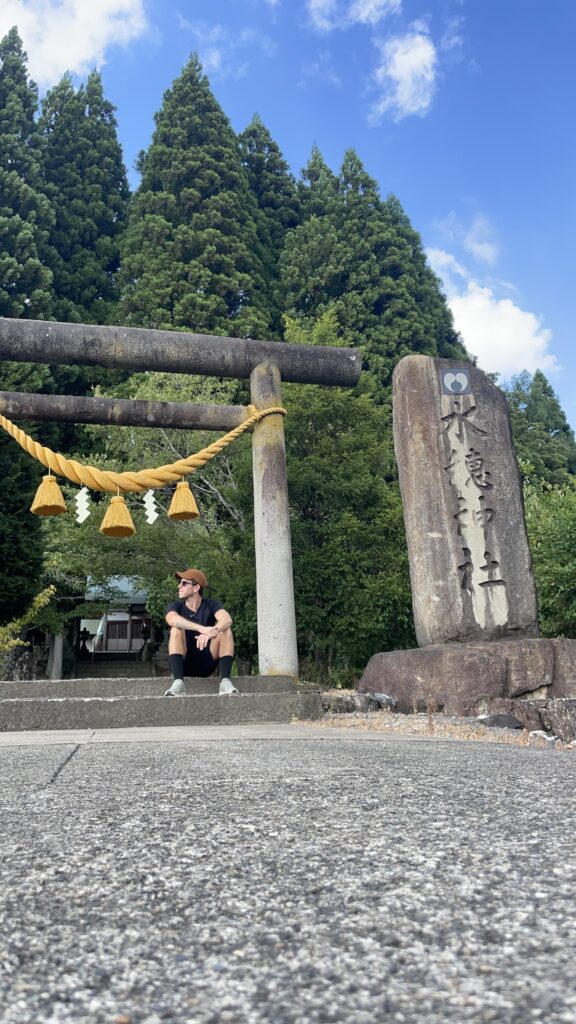
PS: don't take these thoughts into business, you have a great chance of failing at capitalism (laughs). See you later, peace out!
📬 Motorhome in Japan, silent retreat, earthquake in Bangkok… straight to your inbox. Subscribe and hop in.

 EN
EN  PT
PT